

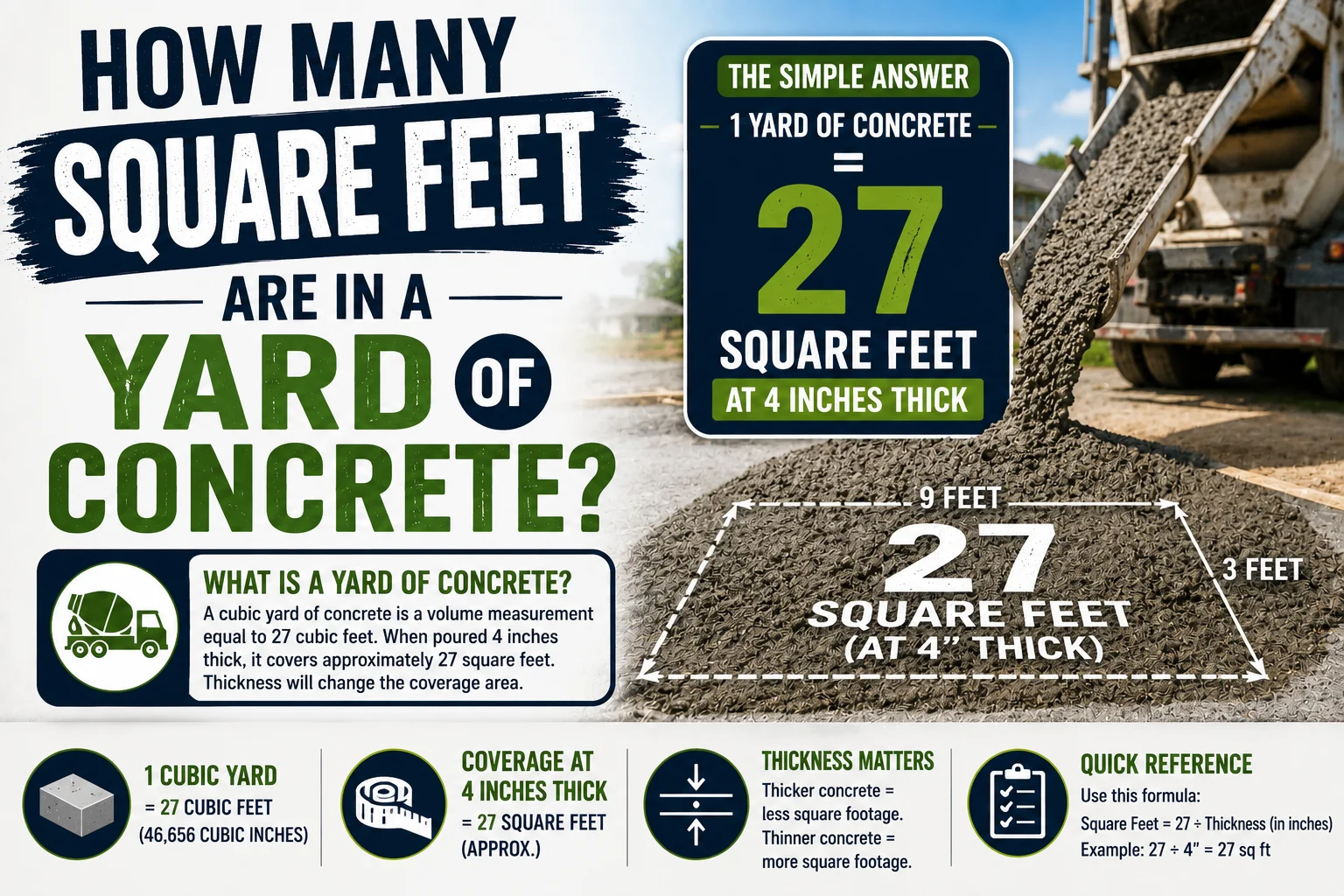
If you are wondering how many square feet are in a yard of concrete, the answer depends on the thickness of the concrete slab.
One cubic yard of concrete equals:
27 cubic feet
However, concrete is usually poured at different depths, so the square footage coverage changes depending on slab thickness.
For example, at a standard depth of 4 inches, one yard of concrete covers approximately:
81 square feet
Understanding concrete coverage is important for:
- Patios
- Driveways
- Sidewalks
- Foundations
- Garage floors
Accurate calculations help homeowners and contractors:
- Save money
- Avoid shortages
- Reduce waste
- Plan projects correctly
In this guide, you will learn how concrete yard coverage works, how slab thickness affects square footage, and how to estimate concrete needs accurately.
Quick Answer
A yard of concrete covers different amounts of square footage based on thickness.
Coverage at Different Depths
Here are common concrete coverage estimates:
| Concrete Thickness | Coverage per Cubic Yard |
|---|---|
| 2 inches | 162 sq ft |
| 3 inches | 108 sq ft |
| 4 inches | 81 sq ft |
| 5 inches | 65 sq ft |
| 6 inches | 54 sq ft |
Standard Slab Thickness
Most residential concrete slabs use:
- 4-inch thickness
At this depth:
1 cubic yard≈81 square feet
What Is a Yard of Concrete?
Concrete is sold by cubic yard volume.
Cubic Yard Definition
One cubic yard equals:
3 feet×3 feet×3 feet=27 cubic feet
This measurement represents:
- Volume
- Not flat surface area
Why Concrete Uses Cubic Yards
Concrete projects involve:
- Length
- Width
- Depth
Because depth matters, suppliers use:
- Cubic yards
instead of square feet.
How Many Square Feet Does a Yard of Concrete Cover?
Coverage changes depending on slab thickness.
4-Inch Slab Coverage
A 4-inch slab is one of the most common residential depths.
Coverage formula:
0.333 feet27 cubic feet≈81 square feet
So:
- 1 cubic yard covers about 81 square feet at 4 inches thick
6-Inch Slab Coverage
Thicker slabs reduce square footage coverage.
At 6 inches:
0.527=54 square feet
Other Thickness Examples
Thinner slabs cover larger areas because less concrete depth is used.
Concrete Coverage Chart
Here is a quick reference chart for common slab depths:
| Thickness | Square Feet per Yard |
|---|---|
| 2 inches | 162 sq ft |
| 3 inches | 108 sq ft |
| 4 inches | 81 sq ft |
| 5 inches | 65 sq ft |
| 6 inches | 54 sq ft |
| 8 inches | 40 sq ft |
This chart helps simplify concrete planning.
How to Calculate Concrete Coverage
Concrete calculations use volume formulas.
Formula Explained
Use this formula:
Length×Width×Depth=Volume
Then convert cubic feet into cubic yards:
27Cubic Feet=Cubic Yards
Step-by-Step Example
Suppose a patio measures:
- 18 feet long
- 12 feet wide
- 4 inches deep
First calculate area:
18×12=216 square feet
Convert depth:
- 4 inches = 0.333 feet
Now calculate volume:
216×0.333≈72 cubic feet
Finally convert to cubic yards:
72÷27≈2.67 cubic yards
Common Concrete Slab Thicknesses
Different projects require different slab depths.
Patios
Most patios use:
- 4-inch slabs
Driveways
Driveways often require:
- 5 to 6 inches
especially for heavy vehicles.
Sidewalks
Residential sidewalks commonly use:
- 4-inch concrete thickness
Factors That Affect Concrete Coverage
Several variables impact actual concrete needs.
Ground Preparation
Uneven ground may require:
- Extra concrete
Waste and Spillage
Some concrete is lost during:
- Pouring
- Transport
- Finishing
Reinforcement Materials
Rebar and gravel bases affect:
- Final slab design
Why Accurate Concrete Estimates Matter
Proper calculations help:
- Prevent project delays
- Avoid expensive shortages
- Reduce leftover material
- Improve budgeting
Concrete deliveries can be costly, so accurate estimates are important.
Common Concrete Estimation Mistakes
Forgetting Depth Conversion
Always convert inches into feet before calculating volume.
Ordering Too Little Concrete
Small shortages can delay:
- Finishing work
- Surface consistency
Ignoring Waste
Professionals often order:
- 5% to 10% extra
for safety.
Tips for Ordering Concrete
Measure Carefully
Double-check:
- Length
- Width
- Depth
before placing orders.
Add Extra Material
A small surplus helps cover:
- Spillage
- Uneven areas
- Last-minute adjustments
Consult Suppliers
Concrete suppliers can help verify:
- Yardage estimates
- Delivery sizes
Real-World Uses for Concrete Coverage Calculations
Concrete calculations are essential for:
- Patios
- Garage floors
- Sidewalks
- Foundations
- Pool decks
- Parking pads
Accurate measurements improve:
- Efficiency
- Cost control
- Construction quality
Fun Facts About Concrete
Concrete Is the Most Used Construction Material
It is widely used worldwide because of:
- Strength
- Durability
- Versatility
Ancient Romans Used Early Concrete
Roman structures still survive today due to:
- Advanced concrete engineering
Concrete Gets Stronger Over Time
Unlike many materials, properly cured concrete continues gaining strength for years.
FAQs
How many square feet does 1 yard of concrete cover?
At 4 inches thick, one cubic yard covers about 81 square feet.
Why does slab thickness matter?
Thicker slabs use more concrete volume, reducing coverage area.
How many cubic feet are in a cubic yard?
One cubic yard equals:
27 cubic feet
What thickness is standard for residential concrete?
Most residential slabs use:
- 4-inch thickness
Should I order extra concrete?
Yes. Contractors often order 5% to 10% extra for waste and uneven surfaces.
Conclusion
So, how many square feet are in a yard of concrete? The answer depends on slab thickness, but at the common residential depth of 4 inches, one cubic yard covers approximately:
81 square feet
Understanding concrete coverage calculations helps homeowners, contractors, and DIY builders estimate materials accurately, reduce waste, and complete projects more efficiently.
Whether you are pouring a patio, driveway, sidewalk, or foundation, knowing how square footage and cubic yards work together is essential for successful concrete planning.


Pingback: How Many Cubic Feet Are in a Cubic Yard?
Pingback: How Many Square Feet Is 30x30? Complete Guide