

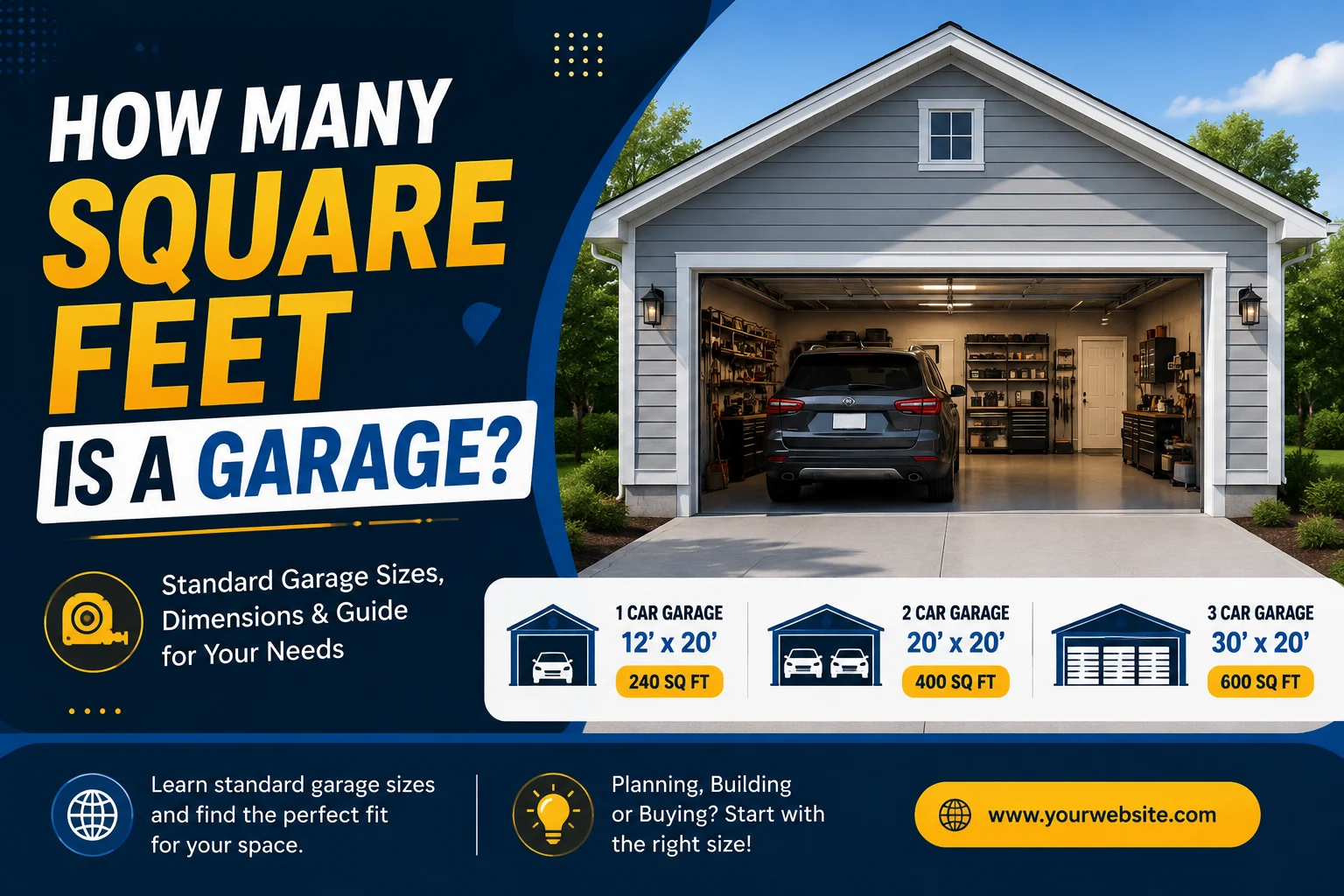
If you are wondering how many square feet is a garage, the answer depends on the type of garage and how many vehicles it is designed to hold.
Most residential garages range between:
200 and 900 square feet
The most common garage sizes include:
- One-car garages
- Two-car garages
- Three-car garages
For example, a standard two-car garage often measures:
20×20=400 square feet
Understanding garage square footage helps homeowners:
- Plan storage
- Park vehicles comfortably
- Design workshops
- Estimate construction costs
- Improve home value
In this guide, you will learn average garage sizes, common dimensions, layout examples, and tips for choosing the right garage size for your needs.
Quick Answer
A typical garage size depends on capacity.
One-Car Garage
A standard one-car garage is usually:
200 to 300 square feet
Two-Car Garage
Most two-car garages measure around:
400 to 600 square feet
Three-Car Garage
A three-car garage often ranges between:
600 and 900 square feet
Standard Garage Sizes Explained
Garage dimensions vary by home style and intended use.
Width and Length Basics
Garage square footage is calculated using:
Length×Width=Square Feet
Common Garage Dimensions
Here are common garage measurements:
| Garage Type | Common Dimensions | Approximate Square Feet |
|---|---|---|
| One-car garage | 12×20 | 240 sq ft |
| Small two-car garage | 20×20 | 400 sq ft |
| Large two-car garage | 24×24 | 576 sq ft |
| Three-car garage | 30×24 | 720 sq ft |
These dimensions vary depending on:
- Vehicle size
- Storage needs
- Building design
Average Garage Square Footage by Type
Each garage style offers different amounts of usable space.
One-Car Garage
Most one-car garages range from:
12×20=240 square feet
This size fits:
- One standard vehicle
- Small storage shelves
- Basic tools
Two-Car Garage
A common two-car garage measures:
20×20=400 square feet
Larger two-car garages may offer:
- Extra storage
- Workshop space
- Bicycle storage
Three-Car Garage
Three-car garages often measure:
30×24=720 square feet
These garages provide:
- Additional parking
- Hobby areas
- Large storage capacity
Garage Size Comparison Chart
Here is a quick comparison of garage sizes:
| Garage Size | Approximate Square Feet |
|---|---|
| 1-car garage | 200–300 sq ft |
| 2-car garage | 400–600 sq ft |
| 3-car garage | 600–900 sq ft |
This chart helps compare typical residential garage dimensions.
What Fits Inside Different Garage Sizes?
Garage usability depends on layout and organization.
Vehicles
Most garages are designed to fit:
- Sedans
- SUVs
- Pickup trucks
Larger vehicles require:
- Wider garages
- Longer parking depth
Storage
Many homeowners use garages for:
- Lawn equipment
- Tools
- Holiday decorations
- Sports gear
Workshop Space
Extra garage space can support:
- Woodworking
- Home gyms
- DIY projects
- Hobby stations
Factors That Affect Garage Size
Several factors influence garage dimensions.
Vehicle Type
Large trucks and SUVs require:
- More clearance
- Wider parking areas
Storage Needs
Garages with heavy storage needs often include:
- Overhead shelving
- Cabinets
- Workbenches
Home Design
Garage size may also depend on:
- Lot size
- Local zoning rules
- Home architecture
Common Garage Design Mistakes
Poor garage planning can limit functionality.
Not Allowing Enough Space
Tight garages make:
- Parking difficult
- Storage cramped
Ignoring Future Needs
Families often outgrow:
- Small garages
especially after adding:
- More vehicles
- Equipment
- Storage items
Poor Organization
Without proper storage systems, garages quickly become cluttered.
Tips for Choosing the Right Garage Size
Measure Your Vehicles
Know your vehicle dimensions before planning garage space.
Plan for Extra Storage
Leave room for:
- Shelves
- Cabinets
- Work areas
Think Long-Term
Future lifestyle changes may require:
- Additional parking
- Workshop space
- Home storage
Benefits of Larger Garages
Larger garages provide:
- Better organization
- More flexibility
- Higher property value
- Easier vehicle access
They also create room for:
- Recreation equipment
- Home projects
- Seasonal storage
Fun Facts About Garages
Garages Originally Stored Carriages
Early garages were designed for:
- Horse-drawn vehicles
before automobiles became common.
Modern Homes Favor Bigger Garages
New homes often include:
- Oversized two-car garages
- Three-car garages
Garage Space Adds Home Value
Well-designed garages improve:
- Buyer appeal
- Storage convenience
- Property functionality
FAQs
How many square feet is a standard garage?
Most garages range from 200 to 900 square feet depending on size.
How large is a two-car garage?
A standard two-car garage is often about 400 square feet.
What is the average one-car garage size?
Most one-car garages measure around 240 square feet.
Can a garage be used as storage space?
Yes. Many homeowners use garages for storage and workshops.
What size garage is best for SUVs?
Larger two-car garages with extra width are usually best.
Conclusion
So, how many square feet is a garage? Most residential garages range between:
200 and 900 square feet
depending on whether the garage is designed for one, two, or three vehicles.
A standard two-car garage commonly measures:
400 square feet
while larger garages provide extra space for storage, workshops, and recreational equipment.
Understanding garage square footage helps homeowners make smarter decisions about parking, storage, home design, and future renovations.



Pingback: How Many Square Feet Will 5 Gallons of Paint Cover?