
If you are planning a lawn installation or landscaping project, one of the most common questions is:
“How many square feet are in a pallet of sod?”
Sod is typically sold by the pallet, but homeowners and contractors need to know how much area each pallet covers in order to:
- Estimate costs
- Plan delivery
- Order the correct quantity
- Avoid shortages or waste
The answer is not always fixed because sod pallet sizes can vary slightly depending on the supplier and grass type. However, there is a standard range used in the industry.
In most cases:
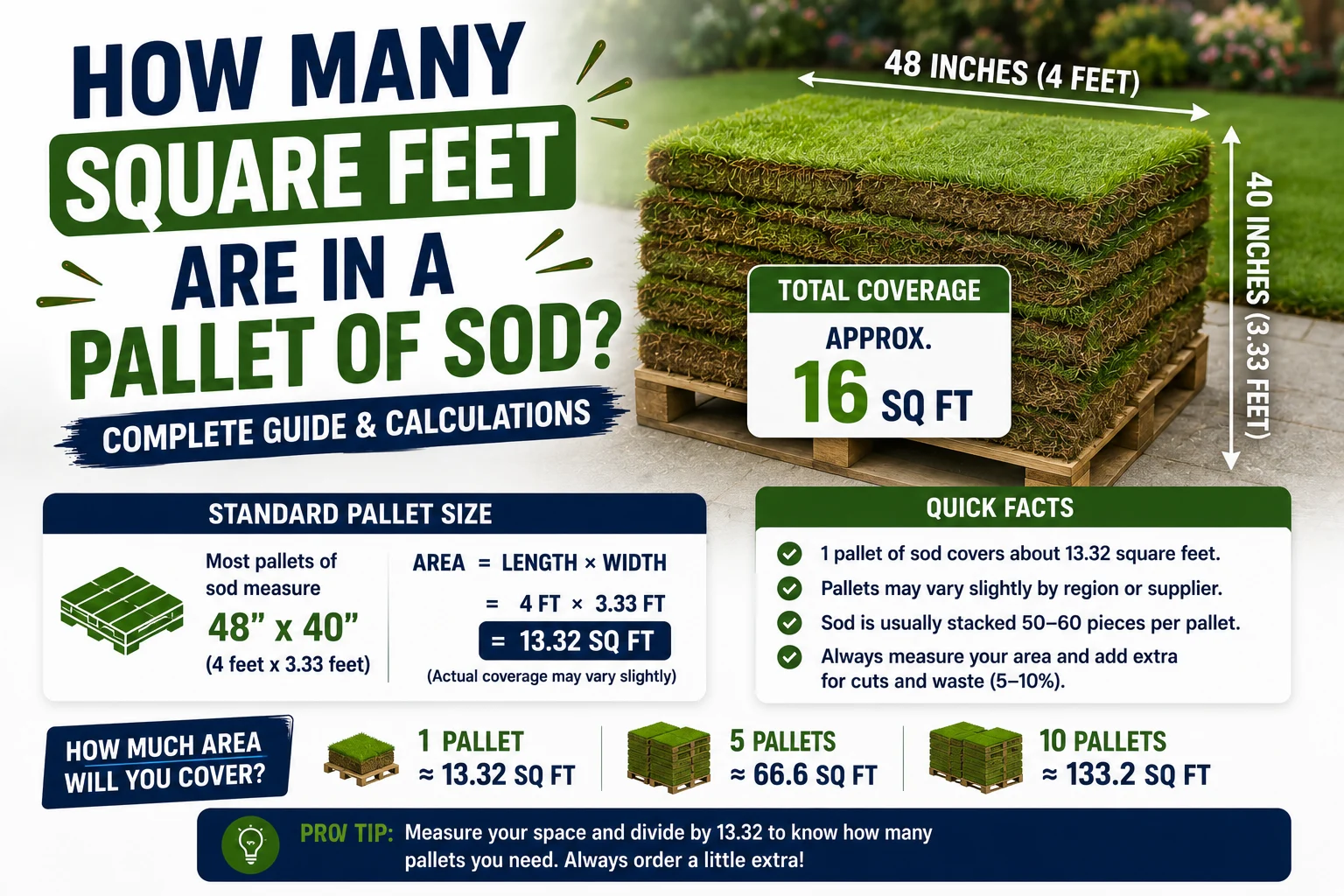
A standard pallet of sod covers about 450 to 700 square feet.
The most common average is:
- 500 square feet per pallet
In this complete guide, you will learn:
- Standard sod pallet coverage
- Different pallet sizes
- How to calculate sod needs
- Real-world landscaping examples
- Cost estimation tips
- Installation guidance
- Common mistakes
- Frequently asked questions
Let’s begin.
What Is a Pallet of Sod?
A pallet of sod is:
- A stacked bundle of pre-grown grass rolls or slabs
It includes:
- Grass
- Soil layer
- Root system
Sod is grown on farms and harvested in rolls or squares, then stacked on pallets for delivery.
Quick Answer: How Many Square Feet in a Pallet of Sod?
The most common industry standard is:
1 pallet of sod≈500 square feet
But actual coverage ranges:
| Type | Coverage |
|---|---|
| Small pallet | 450 sq ft |
| Standard pallet | 500 sq ft |
| Large pallet | 600–700 sq ft |
Why Sod Pallet Sizes Vary
Not all sod pallets are identical because:
1. Grass Type
Different grass varieties have different:
- Roll sizes
- Weight
- Thickness
Examples:
- Bermuda grass
- St. Augustine
- Kentucky bluegrass
- Zoysia grass
2. Regional Standards
Different regions use:
- Different pallet dimensions
- Different harvesting equipment
3. Sod Thickness
Thicker sod = heavier pallet = sometimes smaller coverage
4. Supplier Differences
Each sod farm may define a “pallet” differently:
- Some use 450 sq ft standard
- Others use 500 or 600 sq ft
Standard Sod Coverage by Industry
Most landscaping professionals use:
1 pallet≈450–500 square feet
So when planning:
- Always assume 500 sq ft per pallet unless told otherwise
How Sod Is Measured
Sod is measured in:
- Square feet (area)
Not:
- Weight
- Volume
Because it is installed as:
- A flat surface covering soil
How to Calculate How Much Sod You Need
The formula is simple:
Pallets Needed=Coverage per PalletTotal Area (sq ft)
Example 1: Small Lawn
Lawn size:
- 1,000 sq ft
If one pallet = 500 sq ft:
1000÷500=2
Result:
You need 2 pallets of sod
Example 2: Medium Lawn
Lawn size:
- 2,000 sq ft
Calculation:
2000÷500=4
Result:
You need 4 pallets
Example 3: Large Lawn
Lawn size:
- 3,500 sq ft
Calculation:
3500÷500=7
Result:
About 7 pallets of sod
Common Sod Pallet Sizes
| Pallet Type | Coverage |
|---|---|
| Small pallet | 450 sq ft |
| Standard pallet | 500 sq ft |
| Large pallet | 600 sq ft |
| Extra-large pallet | 700 sq ft |
Real-World Sod Examples
Example 1: Backyard Lawn
A typical backyard:
- 25 ft × 20 ft
Area:
25×20=500 square feet
Result:
1 pallet of sod
Example 2: Front Yard
Front yard:
- 40 ft × 30 ft
Area:
40×30=1200 square feet
Pallets needed:
1200÷500=2.4
Result:
3 pallets (rounded up)
Example 3: Full Yard
Total yard:
- 5,000 sq ft
Calculation:
5000÷500=10
Result:
10 pallets
Extra Material Needed (Waste Factor)
Professionals always add extra sod:
- 5% to 10% extra
Why?
- Cutting edges
- Curved lawns
- Installation errors
- Patch overlap
Types of Sod Grass
Bermuda Grass
- Warm climate
- Fast-growing
St. Augustine Grass
- Thick blades
- Shade tolerant
Kentucky Bluegrass
- Cool climates
- Dense texture
Zoysia Grass
- Slow-growing
- Low maintenance
Sod Installation Tips
1. Prepare Soil
- Remove weeds
- Level ground
- Add topsoil if needed
2. Lay Sod Quickly
Sod should be installed within:
- 24 hours of delivery
3. Water Immediately
Watering helps:
- Root bonding
- Prevent drying
4. Stagger Seams
Like bricks:
- Prevent gaps
- Improve stability
5. Roll After Installation
Helps:
- Remove air pockets
- Improve soil contact
Cost of a Pallet of Sod
Prices vary but typically:
- $150 to $400 per pallet
Factors affecting cost:
- Grass type
- Location
- Delivery distance
Sod Coverage vs Seed
Sod Advantages
- Instant lawn
- No erosion
- Faster results
Seed Advantages
- Cheaper
- More flexible
Common Sod Mistakes
Not Measuring Correctly
Always measure:
- Length × width
Not Ordering Extra
Always add:
- At least 5%
Delayed Installation
Sod dries quickly if not installed.
Poor Soil Preparation
Weak soil leads to:
- Poor root growth
Sod vs Turf Differences
- Sod = natural grass with soil
- Turf = artificial grass
Frequently Asked Questions
How many square feet is a pallet of sod?
Usually:
- 450–700 sq ft
Most common: - 500 sq ft
How many pallets for 1,000 square feet?
1000÷500=2
Answer:
- 2 pallets
Does sod size vary?
Yes, depending on:
- Grass type
- Supplier
- Region
How long does sod last on a pallet?
Best installed within:
- 24–48 hours
Is sod expensive?
It is more expensive than seed but provides:
- Instant lawn results
Final Thoughts
So, how many square feet are in a pallet of sod?
A standard pallet of sod covers about 450 to 700 square feet, with 500 square feet being the most common estimate.
However, exact coverage depends on:
- Grass type
- Supplier
- Region
- Sod thickness
Understanding sod coverage helps you:
- Plan landscaping projects
- Estimate costs accurately
- Avoid shortages
- Ensure proper lawn installation
Whether you are installing a small backyard lawn or a large landscape project, knowing how many square feet are in a pallet of sod ensures your project runs smoothly and efficiently.