

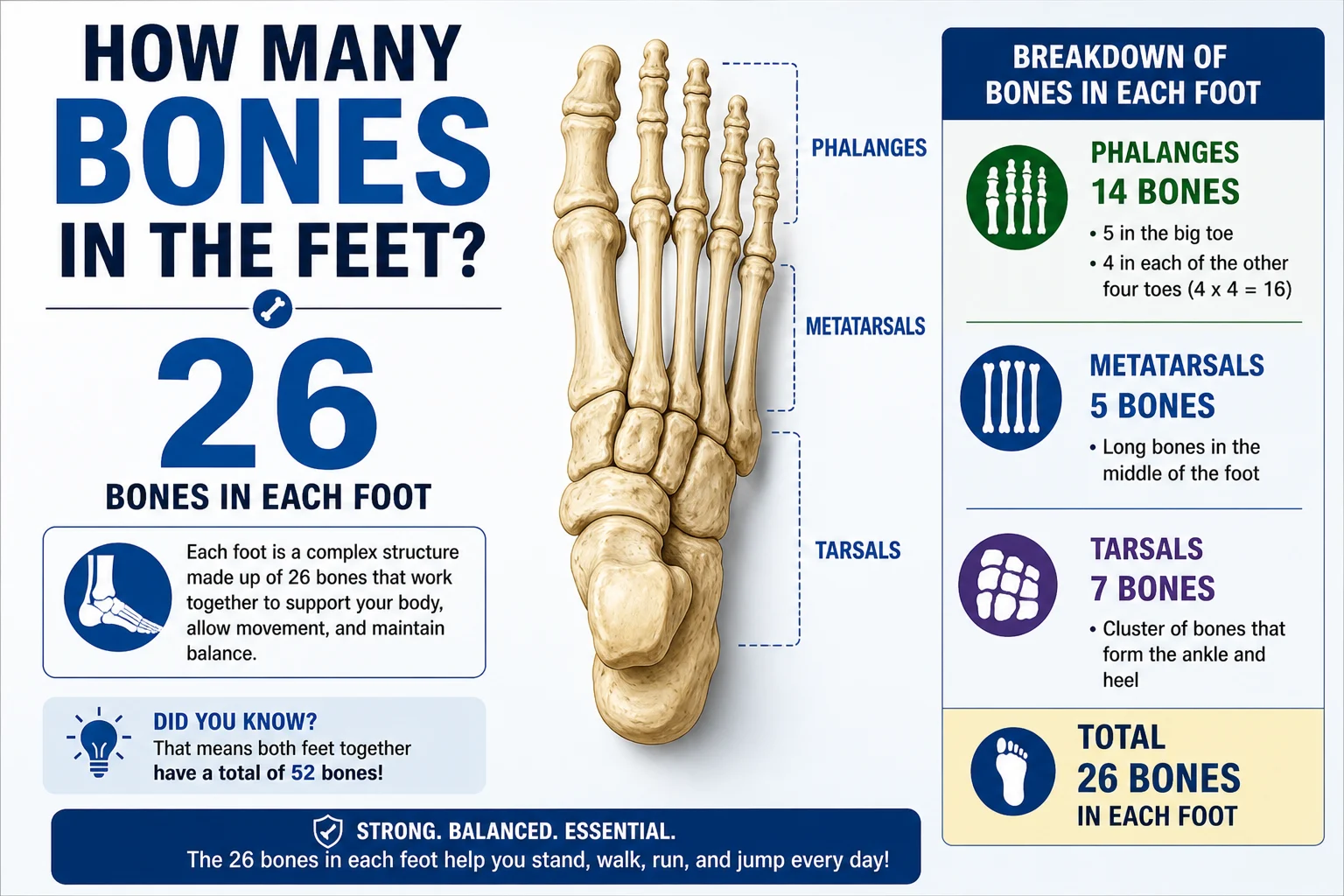
If you’ve ever wondered how many bones in feet, the answer might surprise you. The human foot is one of the most complex parts of the body, designed to support weight, maintain balance, and allow movement.
Understanding the number and structure of foot bones can help you appreciate how your body works and why foot care is so important.
Let’s explore this topic in a simple and easy-to-understand way.
Understanding the Basic Answer
Total Number of Bones
Each human foot contains 26 bones.
Bones in One Foot vs Both Feet
- One foot = 26 bones
- Both feet = 52 bones
That means nearly one-quarter of all the bones in your body are located in your feet.
Structure of the Foot Bones
The bones in your feet are divided into three main groups.
Tarsal Bones
There are 7 tarsal bones in each foot.
These include:
- Heel bone (calcaneus)
- Talus
- Navicular
- Cuboid
- Three cuneiform bones
These bones form the back part of the foot and provide stability.
Metatarsal Bones
There are 5 metatarsal bones in each foot.
They connect the tarsal bones to the toes and help with walking and balance.
Phalanges
There are 14 phalanges (toe bones) in each foot.
Each toe has:
- 3 bones (except the big toe, which has 2)
These bones allow movement and flexibility.
How Many Bones in Feet (Detailed Explanation)
Bone Breakdown
Here’s a simple breakdown per foot:
| Bone Type | Number |
|---|---|
| Tarsals | 7 |
| Metatarsals | 5 |
| Phalanges | 14 |
| Total | 26 |
Functions of Each Group
- Tarsals provide support and absorb shock
- Metatarsals help distribute weight
- Phalanges allow movement and balance
Names of Foot Bones
Some important bones include:
- Calcaneus (heel bone)
- Talus (ankle joint bone)
- Navicular
- Cuboid
- Cuneiform bones
Each plays a specific role in movement and stability.
Why Foot Bones Are Important
Support Body Weight
Your feet carry your entire body weight when standing or walking.
Enable Movement
They allow you to:
- Walk
- Run
- Jump
Maintain Balance
Foot bones work with muscles and ligaments to keep you stable.
Real Life Examples
Walking
Every step you take uses multiple foot bones working together.
Running
Foot bones absorb impact and help push your body forward.
Standing
Even standing still requires constant support from your foot bones.
Common Problems Related to Foot Bones
Fractures
Foot bones can break due to injury or stress.
Arthritis
Joint inflammation can affect movement.
Flat Feet
This condition affects how bones align and support weight.
Interesting Facts
- One-fourth of your body’s bones are in your feet
- Feet contain 33 joints
- They also have over 100 muscles, tendons, and ligaments
Expert Tips for Foot Health
Wear Proper Footwear
Shoes should support your foot structure.
Maintain Good Posture
Proper alignment reduces stress on foot bones.
Stay Active
Regular movement keeps bones strong.
Avoid Overuse
Too much stress can lead to injuries.
FAQs
How many bones are in one foot?
There are 26 bones in one foot
How many bones are in both feet?
There are 52 bones in both feet
What are the main types of foot bones?
Tarsals, metatarsals, and phalanges
Why are foot bones important?
They support weight and enable movement
Can foot bones heal after injury?
Yes, most fractures can heal with proper care
Conclusion
So, how many bones in feet? The answer is:
26 bones in each foot and 52 in both feet
These bones play a vital role in supporting your body, enabling movement, and maintaining balance.
Understanding foot anatomy not only helps you learn more about your body but also encourages better foot care for a healthier, more active life.