
If you’re planning a garden, lawn renovation, or landscaping project, you’ve probably asked: how many cubic feet in a yard of topsoil?
Understanding this conversion is essential for buying the right amount of soil, avoiding waste, and ensuring proper coverage. Whether you’re filling raised beds or leveling your yard, knowing the numbers makes your project smoother and more cost-effective.
Let’s break it down clearly and practically.
Understanding the Basic Conversion
Cubic Feet in One Cubic Yard
The key rule is simple:
1 cubic yard = 27 cubic feet
This is a standard measurement used in landscaping, construction, and gardening.
Why This Measurement Matters
Topsoil is often sold in:
- Cubic yards (bulk delivery)
- Cubic feet (bags)
Knowing the conversion helps you:
- Compare prices
- Calculate how much you need
- Avoid overbuying or running short
How Many Cubic Feet in a Yard of Topsoil (Exact Answer)
The Formula
To convert cubic yards into cubic feet:
Multiply the number of cubic yards by 27
Final Value
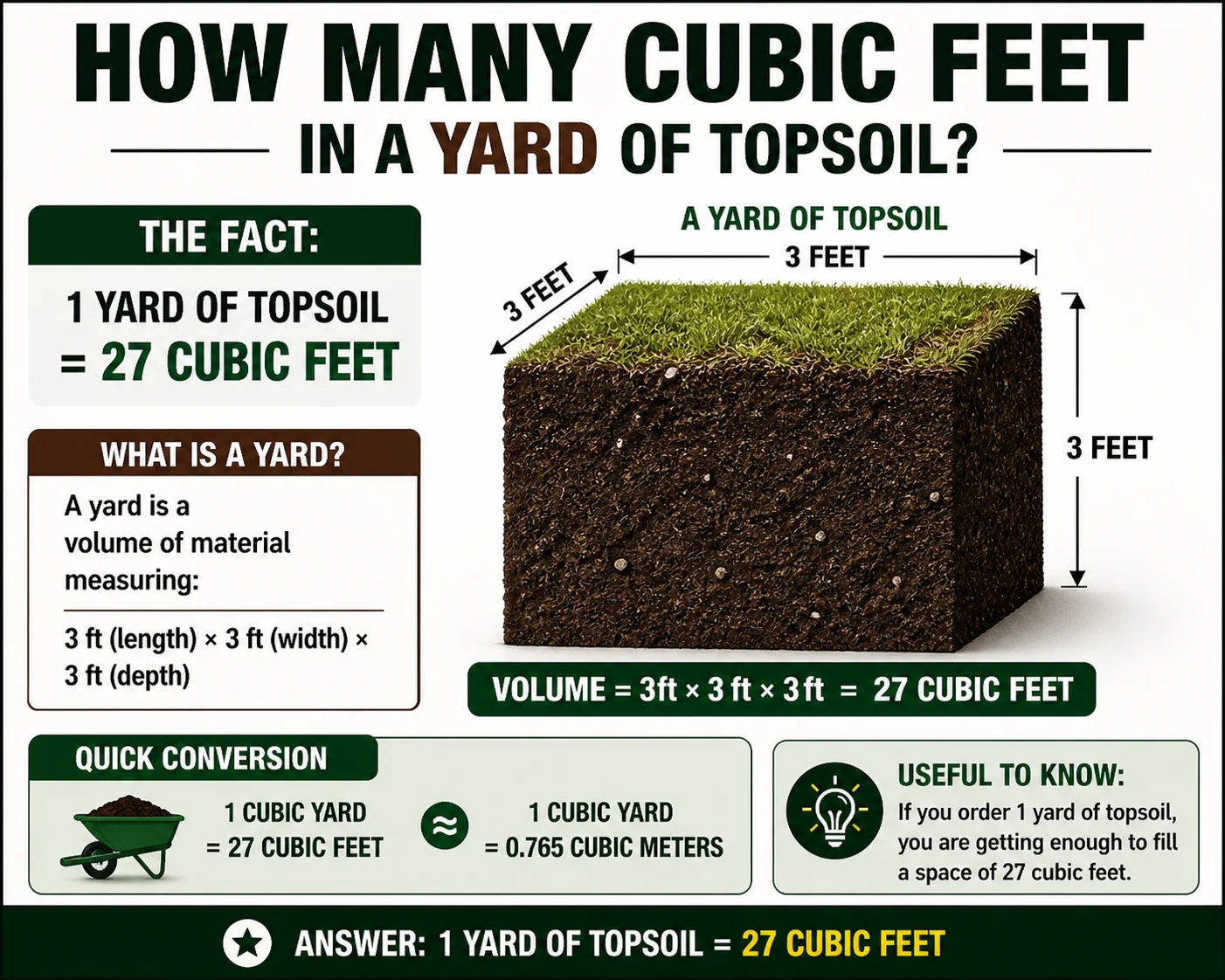
1 yard of topsoil = 27 cubic feet
So, whenever you order one cubic yard of topsoil, you are getting exactly 27 cubic feet of soil.
What Is a Cubic Yard of Topsoil
A cubic yard measures volume, not area. It represents a 3D space that is:
- 3 feet long
- 3 feet wide
- 3 feet deep
When you multiply these dimensions:
3 × 3 × 3 = 27 cubic feet
This helps you visualize how much soil you’re working with.
Conversion Table
Here’s a quick reference chart:
| Cubic Yards | Cubic Feet |
|---|---|
| 1 | 27 |
| 2 | 54 |
| 3 | 81 |
| 5 | 135 |
| 10 | 270 |
This table is especially useful when ordering bulk soil.
Real Life Examples
Raised Garden Beds
If one raised bed requires 1 cubic yard of topsoil:
- You’ll need 27 cubic feet
If soil bags are 2 cubic feet each:
- You’ll need about 13–14 bags
Lawn Leveling
For a medium yard:
- 2 cubic yards = 54 cubic feet
This helps estimate how much soil to spread evenly.
Small Garden Projects
If you only need half a yard:
- 0.5 yard = 13.5 cubic feet
Perfect for small landscaping jobs.
Why This Conversion Is Important
Accurate Purchasing
Knowing cubic feet per yard ensures you:
- Buy the correct amount
- Avoid extra trips to the store
Cost Efficiency
Bulk topsoil (yards) is often cheaper than bagged soil (cubic feet). Understanding the conversion helps you compare prices effectively.
Better Project Planning
It helps you plan:
- Soil depth
- Coverage area
- Project timeline
Step-by-Step Calculation
Simple Method
- Take the number of cubic yards
- Multiply by 27
- Get cubic feet
Example:
3 yards × 27 = 81 cubic feet
How Much Area a Yard of Topsoil Covers
Coverage depends on how deep you spread the soil.
At 2 Inches Deep
- Covers about 162 square feet
At 3 Inches Deep
- Covers about 108 square feet
At 4 Inches Deep
- Covers about 81 square feet
Choosing the right depth is important for plant health and soil quality.
Common Mistakes
Confusing Volume with Area
Cubic feet measure volume, while square feet measure surface area.
Ignoring Depth
Depth directly affects how much area the soil will cover.
Buying Without Measuring
Not measuring your space can lead to buying too much or too little soil.
Expert Tips
Measure Before You Buy
Always calculate the length, width, and depth of your project area.
Choose Proper Depth
- 2–3 inches for topdressing lawns
- 4–6 inches for garden beds
Order Slightly Extra
It’s better to have a little extra soil than run short during your project.
FAQs
How many cubic feet in a yard of topsoil exactly?
There are 27 cubic feet in one yard of topsoil
How many bags equal one yard of topsoil?
About 13–14 bags if each bag is 2 cubic feet
How much area does one yard cover?
Around 81–162 square feet depending on depth
Is bulk topsoil cheaper than bags?
Yes, buying by the yard is usually more cost-effective
What depth of topsoil is best?
Typically 2–4 inches for most projects
Conclusion
So, how many cubic feet in a yard of topsoil? The answer is simple and essential:
1 cubic yard = 27 cubic feet
This conversion helps you plan landscaping projects, estimate soil needs, and save money. By understanding this, you can confidently purchase the right amount of topsoil and complete your project efficiently without guesswork.